Blade of Shadows
- 4.5
- Rating
- 100.00K
- Installs
- Free
- Price

 Analysis by App-foxy
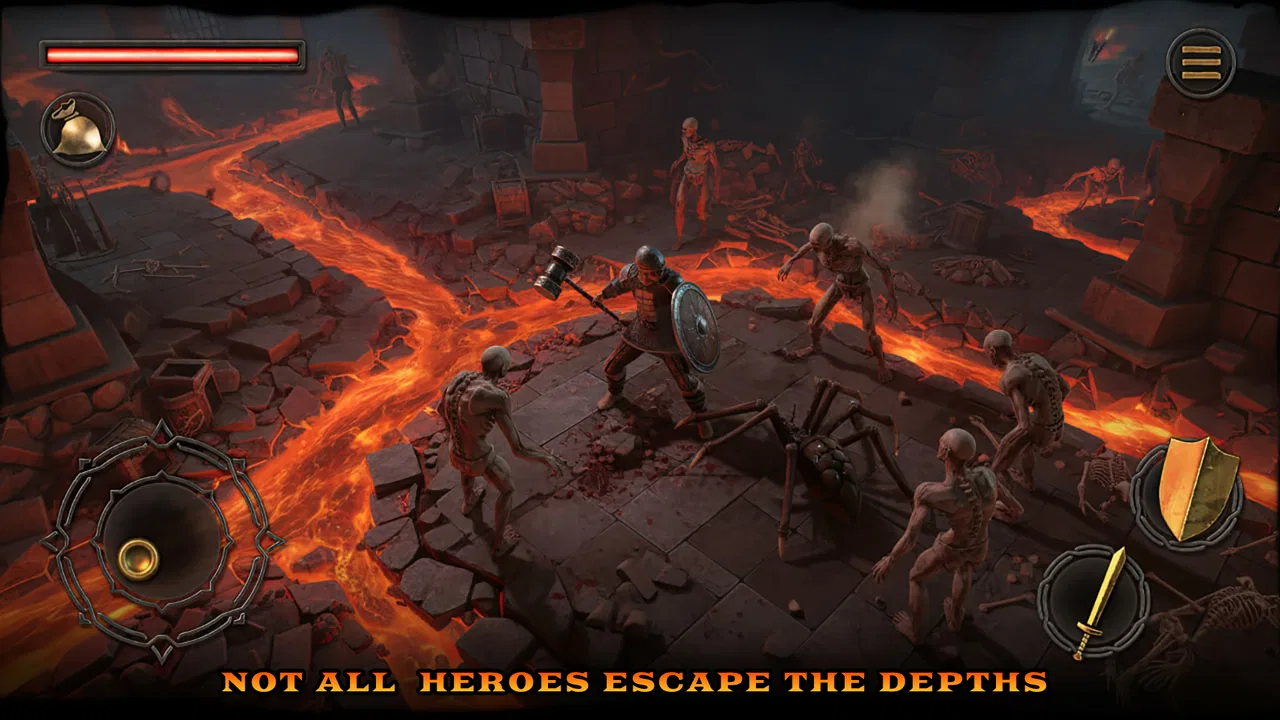
Blade of Shadows is the kind of adventure RPG I pick up when I want a straightforward dungeon crawl rather than a huge open-world commitment. Developed by PlayStormRed, it puts the focus on exploring dangerous underground areas, fighting monsters, improving equipment, and trying to survive the next encounter. After spending time with it, I found that its appeal comes less from novelty and more from the simple rhythm of preparing, entering a dungeon, making careful decisions, and returning stronger.
The game is free to download, which makes it easy to try without making an immediate purchase decision. It is aimed at Teen players, and the current release is version 1.0.0 for devices running Android 12 or later. That combination is worth checking before installing: the game is accessible in price, but compatibility is not universal on older phones or tablets.
How the dungeon-crawling loop feels in practice
My basic routine with Blade of Shadows is pleasantly clear. I begin by looking over my available gear, decide whether I am prepared for another run, and then enter the dungeon with a specific goal in mind. Sometimes that goal is simply to push farther. At other times, it makes more sense to concentrate on surviving a difficult section and improving equipment before attempting the same kind of challenge again.
You May Also Like

 AccuWeather: Weather Radar
AccuWeather Review: A Quick, Clear Forecast for Everyday Decisions
For everyday plans, the best forecast is the one you can understand quickly. AccuWeather makes rain timing, radar, and local conditions easy to act on, with a few trade-offs.

 Hill Climb Racing
Why Hill Climb Racing Still Turns Crashes Into One More Run
A tiny car, a bumpy hill and one more upgrade: Hill Climb Racing keeps resurfacing because its simple chaos makes every near-miss feel personal.

 AliExpress - Shopping App
AliExpress Makes Global Shopping Feel Personal, but Shoppers Bear the Risk
AliExpress turns a global marketplace into a pocket-sized discovery engine. Its reach is useful, its shopping loop compelling, and its trade-offs easy to miss.

 Lords Mobile: Kingdom Wars
Lords Mobile Is a Kingdom-Building Routine, Not a Quick Match
A case-by-case verdict on the building, battles, device demands, and social commitments that make Lords Mobile rewarding for some players and exhausting for others.

 PDF Scanner app - TapScanner
TapScanner Makes Paperwork Easier to Capture, Check, and Share
TapScanner makes scanning with a phone feel less like a rescue operation and more like a dependable step in getting work done. Its capture tools are useful, though not flawless.

 Block Blast!
 Shows How Much a Puzzle Game Can Leave Out
A quiet grid game shows why puzzle players increasingly value instant clarity, repeatable skill and low-pressure play—and where the genre still needs to catch up.
More From Our News Desk
View All News


That distinction matters. Treating every expedition as a race to the deepest possible room can turn the game into a frustrating series of defeats. I had a better experience when I treated each run as useful practice. A failed attempt still teaches me which enemies deserve immediate attention, when I am being too aggressive, and whether my current equipment is holding me back.
The combat is most enjoyable when I slow down enough to read the situation. Dungeon games often tempt players to attack continuously, but that approach becomes expensive when several monsters are active at once. I prefer to create a small amount of space, deal with the most dangerous target first, and avoid spending resources simply because they are available. This makes ordinary encounters feel like preparation for the harder moments rather than disposable obstacles.
Gear upgrades provide the main sense of progress. I do not recommend improving every item as soon as it becomes available. A more efficient habit is to identify the equipment that supports the way you actually play. If you rely on staying close to enemies, prioritize the pieces that help you remain effective in direct encounters. If you prefer a safer, more deliberate approach, avoid wasting resources on upgrades that do not improve that style.
One useful workflow is to separate experimentation from serious progression. When I acquire something unfamiliar, I test it during a lower-risk run instead of taking it immediately into the most demanding area. That gives me a chance to understand its practical value without confusing a bad result with a bad game. It also prevents the common mistake of spending upgrade materials on an item that looked impressive but does not fit my habits.
The adventure structure works especially well in short sessions. I can play through a few encounters, stop, and return later without needing to remember a complicated story or a large collection of objectives. That makes it a good companion for a commute, a break, or an evening when I want progress in small pieces. Players looking for a long cinematic campaign may find the format modest, but anyone who enjoys repeatable dungeon runs should understand the attraction quickly.
Small settings checks that improve the first session
Before judging the game, I recommend spending a moment with the available settings rather than immediately entering the hardest content. The most important checks are practical: make sure the control layout feels comfortable, confirm that the presentation is readable on your screen, and adjust anything that makes repeated combat tiring. A layout that seems acceptable for five minutes can become awkward after several runs.
Touch controls deserve particular attention. I found that small mistakes become more noticeable when several enemies are on screen, so I prefer a setup that keeps the main actions easy to reach without covering the part of the dungeon I need to watch. If your device has a compact display, take extra care with this. A control arrangement that works well on a larger phone may feel cramped on a smaller one.
I also suggest checking sound before starting a serious run. Audio can help make combat feel more responsive, but it is not always suitable for every situation. When I play in a public place, I lower it and rely more heavily on visual cues. At home, I keep enough sound to make the action feel connected without allowing effects to become distracting during repeated attempts.
Performance is another reason to test the game rather than assuming every device will behave identically. The minimum operating system is Android 12, so owners of older devices may not be able to install it at all. On a supported device, I would still begin with a short session before committing to a long play period. If the game feels warm, sluggish, or uncomfortable to control, changing the presentation settings early is better than discovering the issue during a difficult encounter.
Because the game is free, the first session is also a good time to decide how you want to handle optional spending. In-app purchases range from $0.49 to $9.99 per item. I would not build a progression plan around buying anything. Play normally first, learn which equipment and habits actually help, and only then decide whether an optional purchase genuinely adds value for you. That approach keeps the game from turning every difficult moment into a shopping decision.
Parents should also take the Teen content rating seriously. The rating is a useful signal that the game is not intended for very young children, even though the download itself costs nothing. If the device is shared with a younger player, I would review the purchase settings and decide in advance whether spending should be restricted. That is a simple precaution, especially when optional items are available from small amounts upward.
Repeatable habits that make runs faster and safer
Experienced play in Blade of Shadows is less about frantic reactions and more about reducing avoidable mistakes. My most reliable habit is entering a run with one clear priority. I might focus on testing equipment, learning an enemy pattern, or advancing as far as possible. When I try to do all three at once, I make riskier choices and lose track of what the run was meant to accomplish.
I also avoid changing several parts of my setup between attempts. If I alter everything after a defeat, I cannot tell what made the next run better. Changing one meaningful element at a time creates a simple comparison. Perhaps a different weapon suits a particular encounter, or perhaps the real improvement comes from waiting longer before attacking. This method feels slower initially, but it produces better decisions over time.
A practical trick is to use early rooms as a calibration period. I do not spend the opening moments rushing through familiar opponents. Instead, I watch how my current equipment performs, check whether my controls respond as expected, and settle into a rhythm. That small pause reduces the chance of carrying a careless movement or poor timing into a more dangerous section.
When a run goes badly, I try to identify the first mistake rather than blaming the final defeat. The last encounter is often only where the consequences become visible. Maybe I accepted unnecessary damage earlier, used an important resource too soon, or entered a fight without a suitable upgrade. Finding that first error gives me something specific to change, which is far more useful than simply repeating the run with more aggression.
Another efficient pattern is to treat equipment upgrades as answers to problems, not as automatic rewards. If I am losing because enemies survive too long, an offensive improvement may help. If I am losing because I cannot maintain control of the fight, a defensive or more comfortable setup may be more valuable. The best choice depends on the obstacle, and that is why blindly selecting the newest option can be wasteful.
For a realistic everyday session, imagine having fifteen minutes before leaving home. I would use the first few minutes to inspect my equipment, complete a manageable section, and stop after a clear result rather than beginning a demanding run I cannot finish. If I have more time later, I can return with a better idea of what needs improvement. This makes the game fit naturally into a busy day without turning every interruption into a setback.
The same approach helps during longer sessions. I take a short pause after a failed run instead of immediately repeating it while annoyed. Dungeon crawlers can make frustration feel like motivation, but it often leads to predictable errors. A brief reset, followed by one deliberate adjustment, usually produces more progress than several rushed attempts.
Where the design may test your patience
The straightforward structure is also the game’s main limitation. Players who want a large variety of activities, a strong narrative focus, or constant surprises may find the repeated dungeon routine narrow. The core appeal depends on whether fighting, upgrading, and trying again sounds satisfying to you. If that loop already feels repetitive in other adventure RPGs, this game is unlikely to change your mind.
There is also a natural tension between free access and optional purchases. The ability to try the game without paying is welcome, but the presence of items costing from $0.49 to $9.99 means some players will need to be disciplined about spending. I prefer to treat purchases as optional conveniences rather than solutions to difficulty. If you dislike any game that includes in-app buying, this may not be the most comfortable choice.
The Teen rating may also make it unsuitable for families seeking a gentle, child-friendly adventure. The game’s identity is built around dungeon danger and monster battles, so it is better matched with older players who enjoy that atmosphere. I would choose a lighter, more family-oriented alternative for younger children or for anyone who wants a relaxed puzzle adventure instead of combat-driven progression.
Compared with a large premium RPG, Blade of Shadows is easier to approach but less likely to provide the same breadth. A premium title may offer richer storytelling, more elaborate character development, and a more expansive world, while this game is better suited to compact sessions and repeatable improvement. Compared with a casual action game, it asks more from the player because equipment choices and survival habits matter. That middle position is its clearest identity.
It is also not the right option for someone who wants a completely passive experience. You cannot expect the game to carry every encounter through automatic progression or constant guidance. The enjoyment comes from noticing what went wrong and refining the next attempt. Players who like learning through repetition will find that rewarding; players who want instant power and minimal friction may become impatient.
Since the current release is version 1.0.0, I approach it as an early, focused experience rather than a mature platform with years of accumulated content. That does not make it a poor choice, but it does affect expectations. I would install it for the dungeon loop itself, not because I expect an enormous collection of systems or a constantly expanding catalog of activities.
Who should install it, and who should pass?
I recommend Blade of Shadows to players who enjoy compact adventure RPG sessions, equipment improvement, and the satisfaction of turning a failed dungeon run into a successful one. It is especially suitable if you like making small tactical adjustments and do not mind revisiting familiar situations to improve your execution.
It is a sensible free option for someone who wants to test the genre before committing to a paid RPG. The game has enough structure to demonstrate whether dungeon crawling suits your habits, while the uncomplicated routine makes it easy to understand. Its average rating is 4.3 from around 425 ratings, and the game has passed 100K installs, which suggests that other players are finding value in this focused format.
I would skip it if your priority is a deep story, a broad open world, or a completely purchase-free experience. I would also look elsewhere if your device cannot run Android 12 or later, or if touch-based combat is uncomfortable for you. In those cases, a premium adventure with a different control style or a more narrative-driven RPG may be a better fit.
For everyone else, I suggest giving the first session a fair test. Do not judge the game after one careless defeat. Check the controls, try a lower-risk run, and make one equipment decision based on an actual problem. That process reveals the game more accurately than rushing into the hardest available challenge.
My final take after settling into the loop
Blade of Shadows succeeds because it understands the appeal of a focused dungeon crawl. I like that its progress comes from a combination of better gear and better judgment, rather than from simply moving forward. The most satisfying moments are not necessarily the deepest advances; they are the runs where I recognize a previous mistake, adjust my approach, and survive a situation that used to stop me.
Its weaknesses are equally clear. The repeated structure will not suit everyone, optional purchases require sensible boundaries, and the experience is more focused than expansive. Still, those limitations do not undermine the game’s main purpose. PlayStormRed has created a free adventure title for people who enjoy returning to a challenge with a slightly better plan each time.
My advice is to approach it as a disciplined pick-up-and-play RPG rather than a full replacement for a large console-style adventure. Keep your upgrades purposeful, change one variable between attempts, use the opening rooms to settle into the controls, and stop a run when frustration starts making decisions for you. With those habits, the dungeon loop becomes more rewarding and much less wasteful.
For me, that makes it worth trying on a compatible device. It is not the broadest adventure available, but it offers a clear reason to return: every attempt can teach you something, and every useful lesson can turn into a stronger run. If that kind of gradual mastery sounds more appealing than a constant stream of new distractions, this is a game I would comfortably recommend to a friend.
FAQs for Blade of Shadows
01What is Blade of Shadows, and what makes it unique?
Blade of Shadows is an immersive action-adventure game available on Android and iOS. It stands out with its stunning graphics, engaging storyline, and dynamic combat system. Players are drawn into a dark fantasy world filled with challenging quests and formidable enemies. The game’s uniqueness lies in its blend of intricate puzzles and real-time combat, offering a comprehensive gaming experience.
02Is Blade of Shadows free to play, or does it have in-app purchases?
Blade of Shadows is free to download and play. However, it does offer in-app purchases that can enhance gameplay, such as special weapons, armor, and other cosmetic items. These purchases are optional, and players can still enjoy the full game without spending money, though some features might be achievable faster with purchases.
03What are the system requirements for Blade of Shadows?
For Android, Blade of Shadows requires at least Android 8.0 and a device with 3GB RAM for optimal performance. iOS users will need iOS 11.0 or later. The game is graphically intensive, so ensure your device has enough free space and meets the RAM requirements to avoid lag or crashes during gameplay.
04Does Blade of Shadows require an internet connection to play?
Blade of Shadows primarily operates in an offline mode, allowing players to enjoy the game without an internet connection. However, certain features, such as updates, leaderboards, and special events, will require internet access. It’s advisable to connect occasionally to ensure the game is up-to-date.
05How does the multiplayer feature work in Blade of Shadows?
Blade of Shadows includes a multiplayer feature that allows players to team up with friends or compete against others in various challenges. This mode requires an internet connection and offers both cooperative and competitive gameplay options. Players can join guilds, participate in events, and climb the ranks on leaderboards to earn rewards.
Pros
- Intuitive controls make gameplay smooth.
- Stunning graphics enhance immersion.
- Wide array of weapons to choose from.
- Engaging storyline keeps you hooked.
- Regular updates add new content.
Cons
- Requires a stable internet connection.
- In-app purchases can be costly.
- Some levels feel repetitive.
- Battery drain is noticeable during play.
- Limited offline gameplay options.

Blade of Shadows
Gallery